
With thousands of whiskey bottles competing for our attention, doing something genuinely different has become increasingly difficult.
Recently, Locke + Co. Distilling sent me samples of three of their whiskeys: Big Catch Bourbon, Aspen Aged Rye, and Big Blaze Bourbon. All three share something I had never encountered during my whiskey journey. Locke + Co. uses hand-cut and charred aspen wood discs during the finishing process.
I have tasted whiskey finished with all kinds of wood, but aspen? That was a first for me.
The Founders of Locke + Co. Distilling
Owen Locke and Rick Talley each brought a different background to the venture. Owen had experience in brewing, and both men worked in sales for Beam Suntory before launching their own whiskey company.
Their whiskey journey started small, with a 23-gallon still and a vision for creating distinctive small-batch whiskey. Eventually, they found a way to separate themselves from an increasingly crowded craft whiskey market: aspen.
Instead of simply releasing another bourbon or rye, Locke + Co. began experimenting with hand-cut and hand-charred aspen wood discs to influence the whiskey during additional maturation.
That process immediately caught my attention.
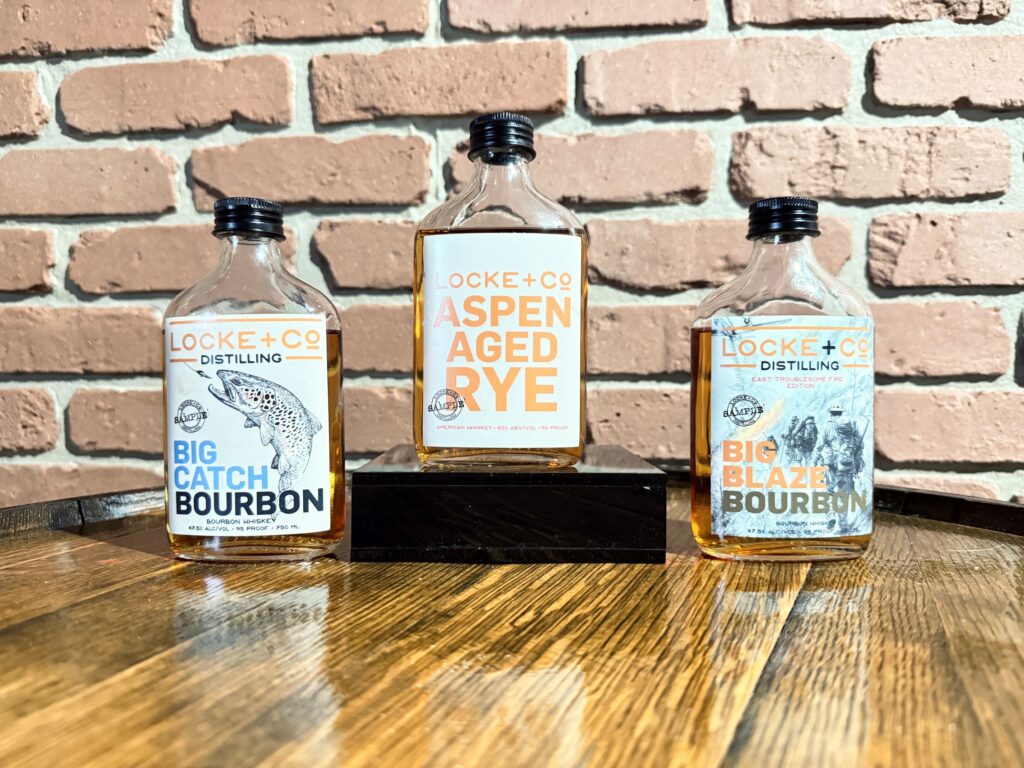
Three Locke + Co. Whiskeys
The three samples I received were:
Big Catch Bourbon – 95 Proof
Aspen Aged Rye – 90 Proof
Big Blaze Bourbon – 95 Proof
Although all three use aspen during their maturation process, each whiskey delivers a noticeably different experience.
Big Catch Bourbon – 95 Proof
Big Catch Bourbon begins its life aging in traditional 53-gallon American oak barrels. Locke + Co. then gives the bourbon additional maturation with charred aspen discs. Even more interesting, they use a combination of new charred aspen and previously used aspen discs that had already played a role in aging their rye whiskey.
That is where things get interesting.
My impression of Big Catch is mellow sweetness. I found caramel accompanied by peppery spice and a wonderful mouthfeel. The aspen doesn’t overpower the bourbon. Instead, it seems to add another dimension to an already approachable whiskey.
This is not a whiskey that screams for your attention. It earns it.
Aspen Aged Rye – 90 Proof
Aspen Aged Rye may have surprised me the most.
Locke + Co. ages the rye in new 30-gallon American oak barrels with several different char levels, including Char 2, 3, 4, and 5. They eventually mingle whiskey from those different barrels before adding hand-cut, hand-charred aspen discs for another eight months of maturation.
I love the concept because each char level can interact with the whiskey differently. Bringing them together creates an opportunity for additional complexity before the aspen ever enters the picture.
The result impressed me.
This rye immediately became a serious contender for one of my favorite rye whiskeys. It delivers the familiar aroma and spice I expect from rye, but a delicate sweetness rounds everything out beautifully.
I believe the combination of char levels, followed by the aspen maturation, creates something greater than any of those individual components could accomplish on its own.
Big Blaze Bourbon – 95 Proof
Big Blaze has the most interesting story of the three.
The bourbon ages for more than five years in new 53-gallon American oak barrels, but the finishing wood makes this release particularly unusual. I believe this bottle is a special release for Locke + Co Distillers.
Locke + Co. harvested the aspen from private property in Grand County, Colorado, affected by the devastating 2020 East Troublesome Fire. Instead of charring this particular aspen themselves, nature had already done the job. They hand-cut the naturally burned aspen and use it during the bourbon’s final maturation.
That is one heck of a backstory for a bottle of bourbon.
Fortunately, the whiskey lives up to the story.
Big Blaze was my favorite of the three samples. It has a robust flavor profile, and perhaps the story influenced my senses, but the whiskey actually made me think about wood and fire as I tasted it.
There is something rustic about it without becoming overly smoky or dominated by wood.
Locke + Co. also gives the release a greater purpose. Ten percent of the proceeds from Big Blaze goes toward fire assessment and mitigation programs in Grand County.
Great story. Great concept. Most importantly, great whiskey.
Whiskey Finished With Different Woods
During my journey of sampling more than 500 different whiskeys, I have learned to appreciate both tradition and innovation.
Whiskey needs tradition. Without it, we lose the connection to the generations of distillers who built the American whiskey industry.
But innovation keeps things interesting.
I have sampled whiskey influenced or finished with various types of wood, including American oak, French oak, Japanese oak, and amburana. I have also tasted whiskey that incorporated cherry, sassafras, and maple during maturation or finishing.
Aspen, however, was completely new to me.
That is what made these three Locke + Co. whiskeys so interesting. The company isn’t simply creating another label and calling it something new. The aspen actually becomes part of the whiskey-making process.
There is a difference between innovation and marketing. Sometimes the line separating the two becomes pretty thin in today’s whiskey world.
This feels like innovation.
Should Locke + Co. Whiskey Be on Your Radar?
I know what some of you are thinking.
Why write about a whiskey I may never see sitting on the shelf of my local liquor store?
Because part of the fun of whiskey is discovering something new.
Many of the bourbon and whiskey enthusiasts who read Bourbonfool, watch my videos, and attend my tastings aren’t simply looking for the next allocated bottle. They want to discover interesting whiskey, learn about unusual production methods, and occasionally find something their friends haven’t tried yet.
Locke + Co. checks those boxes.
Big Catch Bourbon, Aspen Aged Rye, and Big Blaze Bourbon share a common thread, but each delivers a different experience. The use of aspen isn’t simply a clever story printed on the back of the bottle. It contributes to what makes these whiskeys different.
After tasting all three, I came away impressed with the concept and, more importantly, the whiskey.
If you happen to see a bottle of Locke + Co., don’t ignore it because you don’t recognize the name.
Give the aspen a chance.
You might discover something you didn’t know you were looking for.
Thanks for the background information, I already have two bottles of the Big Blaze on the way to me from my nephew in Colorado. Should have them in a couple of weeks and looking forward to tasting it.