
Certain pairings in life make sense. Steak and a good cabernet. Cigars and a slow-burning evening on the porch. And in the state of Kentucky, nothing feels more natural than Kentucky Bourbon and the Kentucky Derby. It’s not just a coincidence. It’s history, culture, and identity wrapped into one long weekend at Churchill Downs.
If you’ve ever been to Derby weekend, you already know. The air carries a mix of anticipation, springtime humidity, and the unmistakable scent of fresh mint and crushed ice. Before the horses even reach the gate, the drinks are already flowing. And leading that charge, of course, is the Mint Julep. I believe the origin of the Mint Julep is a great example of Kentucky Bourbon history.
The Mint Julep
The Mint Julep is more than just the “official drink” of the Kentucky Derby. It’s a symbol of Southern hospitality and Kentucky pride. Traditionally made with bourbon, sugar, crushed ice, and mint, it sounds simple on paper. But like most things in bourbon, simplicity hides nuance. The quality of the whiskey matters. Balance matters. And during Derby weekend, it’s estimated that over 120,000 Mint Juleps are served at Churchill Downs alone. That’s not just a statistic. That’s a statement.
Now here’s something a lot of people don’t realize. The Mint Julep didn’t start as a Derby tradition. It was originally consumed as a morning drink in the South, sometimes even prescribed for medicinal purposes. It wasn’t until the 1930s that Churchill Downs officially embraced it, helped along by the introduction of the now-iconic souvenir glass. That glass, by the way, has become a collectible. Some folks chase those year-over-year designs with the same energy others chase allocated bottles.
And speaking of bourbon, there’s no place more central to its story than Kentucky itself. Roughly 95 percent of the world’s bourbon is produced in this state. That means when you’re sipping a julep at the Derby, you’re not just drinking a cocktail. You’re tasting local history. Distilleries from across the state—many with roots going back generations—have all played a role in shaping what ends up in that silver cup.
Community
The relationship between bourbon and the Derby isn’t just about what’s in your glass. It’s also about who shows up. Distillers, brand ambassadors, collectors, and enthusiasts all converge on Louisville during Derby week. It becomes an unofficial summit for the bourbon world. Private tastings, special releases, and behind-the-scenes events happen all over the city. If you know where to look, Derby week can rival any major whiskey festival in terms of access and experience.
There’s also a deeper cultural connection that often gets overlooked. Both bourbon and horse racing are agricultural at their core. They rely on the land, the climate, and the patience of time. The same limestone-rich water that nourishes Kentucky’s bluegrass also plays a critical role in bourbon production. That water filters out iron and adds calcium, creating an ideal foundation for fermentation. It’s not a stretch to say that the same natural resources that help raise champion thoroughbreds also help create world-class bourbon.
The Race
And then there’s the spectacle. The Derby is known as “The Most Exciting Two Minutes in Sports,” but the lead-up is where the real story unfolds. The fashion, the pageantry, the traditions—it all mirrors the ritual of bourbon itself. Never rush a good pour. You don’t rush Derby day. Take in the spectacle. You appreciate the details. In my opinion, Bourbon could be known as “The most anticipated eight years in whiskey.”
One of my favorite parts of Derby weekend isn’t even the race. It’s the quiet moment before everything kicks off. Early in the day, before the crowds fully swell, you can find a spot, order that first Mint Julep, and just sit with it. The condensation on the glass, the aroma of mint, the weight of the bourbon underneath—it’s a reminder that this isn’t just a party. It’s a tradition that’s been built over decades, even centuries.
There are also some lesser-known quirks worth mentioning. For example, premium versions of the Derby Mint Julep have been sold for thousands of dollars, often featuring rare bourbons and gold-plated cups, with proceeds going to charity. It’s a far cry from the humble origins of the drink, but it speaks to how deeply bourbon culture has embedded itself into the Derby experience.
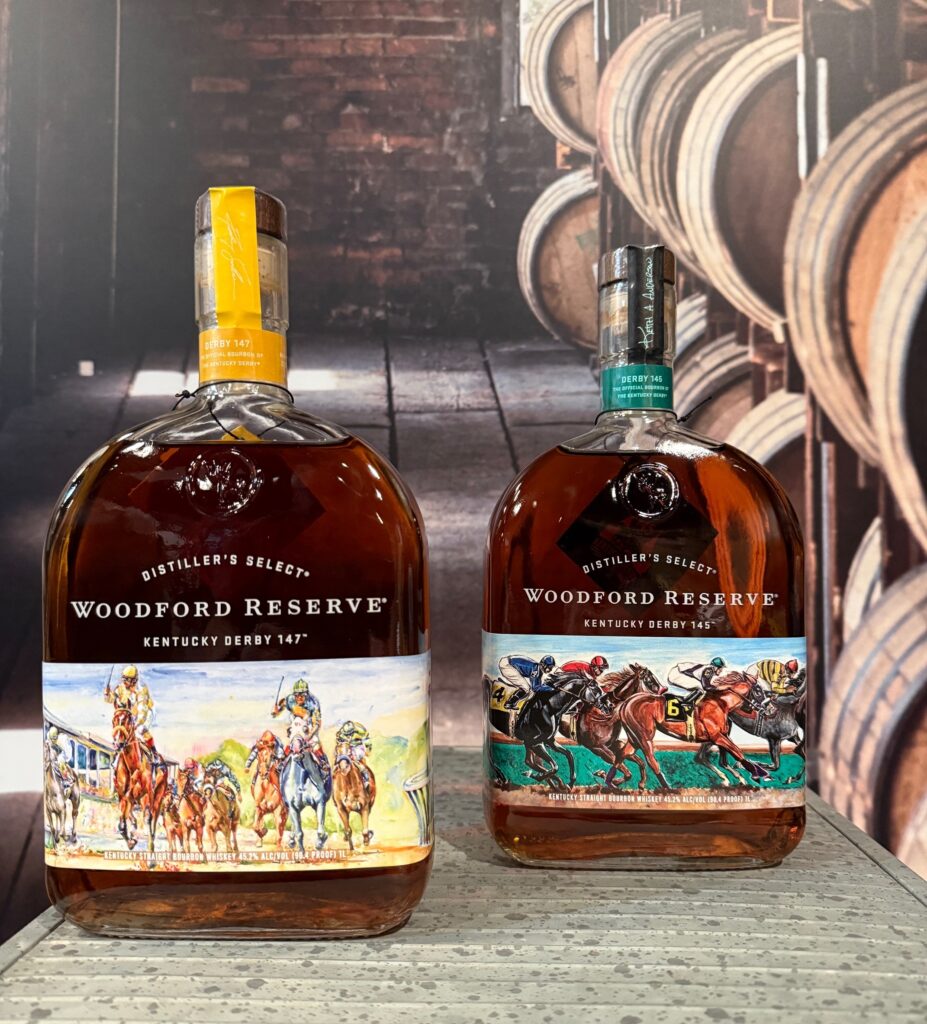
Special Bottles
Another interesting layer is how brands position themselves around Derby time. Limited-edition bottles, special labeling, and Derby-themed releases flood the market each spring. Some are worth your time. Some are pure marketing. That’s part of the fun—and the challenge—of being a bourbon drinker in today’s landscape.
At the end of the day, the connection between Kentucky bourbon and the Kentucky Derby isn’t manufactured. It’s organic. It’s rooted in place, people, and tradition. One doesn’t feel complete without the other.
And maybe that’s the real takeaway. Whether you’re at Churchill Downs in person or watching from your living room, pouring a glass of Kentucky bourbon during the Derby isn’t just about having a drink. It’s about participating in something bigger. A shared moment. A Kentucky moment. If you are lucky, you will be sharing the event with great friends, as I will be.
That’s a tradition worth raising a glass to. Cheers!
Let me know how you will be celebrating Derby Day?
We are celebrating at a friends house! Big hats, fancy dresses, dapper men, southern comfort food and lots and lots of bourbon (some in the form of the mint julip).
Kate,
Cannot wait to see everyone. Thanks for checking in!
Don, All those many years ago growing up in the Louisville area, Derby time was so special. People waited all year for Derby time. The whole city was in a good mood and there were so many things to see and do. The real treat was to attend the Derby to watch all the people from all over the world dressed in their best “Sunday go to meeting” clothes. I think the ladies outdid themselves every year. Each year, I make sure I participate in the singing of “My Old Kentucky Home.” Such a special time of the year.
Keith,
Thanks so much for sharing. You are a special member of the Wednesday night bourbon group. See you in May!