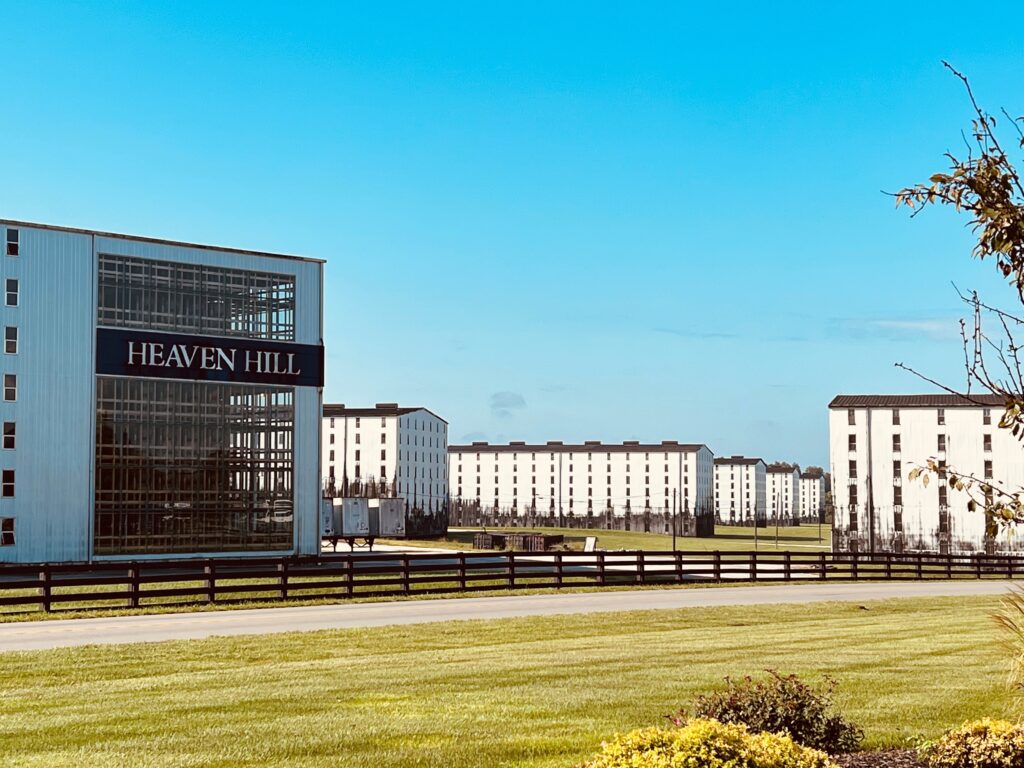
In a bourbon industry increasingly dominated by multinational corporations, Heaven Hill Distillery stands apart. Not because it is small. Quite the opposite. Heaven Hill is the largest family-owned and operated distillery in America. What makes them remarkable is not size alone, but survival, persistence, and control of their own destiny. If you want to understand post-Prohibition bourbon history, the preservation of Bottled-in-Bond whiskey, and how an independent company competes against global conglomerates, you need to understand Heaven Hill. I have had the opportunity to select multiple single-barrels at Heaven Hill. It is a historic and important part of Kentucky Bourbon History
Founded in 1935
Heaven Hill was founded in Bardstown, Kentucky, on December 13, 1935, just two years after the repeal of Prohibition. The Shapira family, led by David Shapira, partnered with local investors and hired Joseph L. Beam of the Beam family to oversee distilling operations. Their timing was bold. The industry was unstable, demand was uncertain, and much of Kentucky’s distilling infrastructure had been dismantled. Their early business model leaned heavily on contract distilling and private labels, but one of their first widely distributed in-house retail brands was Bourbon Falls, a 2-year bourbon, but was later eclipsed by Old Heaven Hill, which gained traction in the late 1930s and 1940s. From the beginning, Heaven Hill made a strategic decision that would define its future: they built inventory aggressively, even during uncertain times.
High Volume and Value Forward
During the mid-20th century, Heaven Hill positioned itself as a high-volume, value-forward producer with substantial aging stocks. When bourbon entered its decline in the 1960s and 1970s, many distilleries closed or shifted focus. Heaven Hill did not stop distilling. They continued filling barrels, even as vodka surged and American whiskey fell out of fashion. That patience would become one of the company’s defining strengths when bourbon resurged decades later.
Bottled-in-Bond
If there is one category where Heaven Hill has exerted outsized influence, it is Bottled-in-Bond bourbon. The Bottled-in-Bond Act of 1897 established strict federal standards: one distilling season, one distiller, one distillery, aged at least four years, and bottled at 100 proof under government supervision. While many producers abandoned Bottled-in-Bond during bourbon’s downturn, Heaven Hill leaned into it. A prime example is Evan Williams Bottled-in-Bond, which has remained one of the most consistent value Bottled-in-Bond expressions on the market for decades. In 2018, they further reinforced their identity in the category with the national release of Heaven Hill Bottled-in-Bond. This seven-year expression emphasized maturity and compliance with historic standards. Few modern distilleries can credibly claim to have preserved this federal whiskey classification through both industry collapse and revival.
The Devastating Fire
On November 7, 1996, Heaven Hill faced what could have been its end. A devastating fire destroyed its Bardstown distillery and consumed seven rickhouses, resulting in the loss of approximately 90,000 barrels of aging whiskey. Flaming bourbon flowed through nearby fields and into the St. Francis Creek, marking one of the most destructive distillery fires in Kentucky history. For many companies, such a catastrophe would have meant bankruptcy or acquisition. Heaven Hill survived because of its long-term inventory strategy and diversified portfolio. In 1999, they acquired the historic Bernheim Distillery in Louisville, restoring full-scale production and continuing operations under family ownership. The company did not disappear. It adapted following the acquisition of the Bernheim Distillery; Heaven Hill acquired two highly distinctive brands in the spirits industry. Old Fitzgerald and Christian Brothers Brandy.
Proprietary Yeast
Heaven Hill’s operational philosophy emphasizes consistency. Rather than frequently altering mashbills or chasing trends, they have relied on a core set of grain recipes for decades. Their primary bourbon mashbill consists of 78 percent corn, 10 percent rye, and 12 percent malted barley, while a secondary, higher-rye variation supports other expressions. An often overlooked factor in their flavor continuity is yeast stewardship. The company has preserved a proprietary yeast strain for decades, contributing to the recognizable house profile that many enthusiasts identify as nutty, caramel-forward, lightly herbal, and balanced. In fact, even the fire of 1996 did not destroy their yeast cache. It survived in a fifth-floor refrigerator.
A Litany of Popular Brands
One of the things that I discovered is that many people drink their favorite bourbon and know it by the brand name. However, many times they do not connect it to the producing distillery. During my presentations to groups of bourbon lovers, they ofen do not associate their brand with Heaven Hill. Today, Heaven Hill’s portfolio is extensive and strategically tiered. It includes widely recognized names such as Evan Williams, Elijah Craig, Larceny, Henry McKenna, and Old Fitzgerald. Each brand occupies a specific market position, from accessible everyday bourbon to limited, high-age-statement releases. Elijah Craig is frequently credited with popularizing the “small batch” concept in bourbon marketing during the 1990s, while Henry McKenna 10 Year Bottled-in-Bond gained significant attention after earning Best in Show Whiskey at the San Francisco World Spirits Competition in 2019. Keep in mind that early versions of Elijah Craig were often aged longer than today’s releases.
A Massive Inventory
In terms of industry standing, Heaven Hill ranks among the top bourbon producers by volume and holds one of the largest inventories of aging whiskey in Kentucky. Unlike many competitors now owned by multinational corporations, Heaven Hill remains under the Shapira family control. That independence shapes long-term strategy, capital allocation, and aging decisions. It allows the company to think in decades rather than quarters.
Distilling in Bardstown Again
Today, Heaven Hill is back to distilling in historic Bardstown, Kentucky. Their Heaven Hill Springs distillery filled its first barrel in 2025 and is continuing to innovate while maintaining its unique position in the bourbon industry.
Heaven Hill Distillery: the family-owned giant matters because it represents continuity in an industry that has experienced dramatic swings. It survived the aftermath of Prohibition. It endured bourbon’s near-collapse in the 1970s. It overcame a catastrophic fire in 1996. It remained independent through an era of consolidation. It preserved Bottled-in-Bond bourbon when others abandoned it. For serious bourbon enthusiasts who value history, regulatory tradition, and strategic patience over marketing mythology, Heaven Hill offers one of the most compelling case studies in modern American whiskey.