
Truth, Hype, and the Cost of Bad Information
Bourbon has always been built on stories. Some of them are true. Some of them are exaggerated. And lately, far too many of them are simply wrong.
Spend a few minutes scrolling social media, and you’ll see it—confident voices, dramatic pauses, a bottle held just right for the algorithm, followed by a statement that sounds authoritative but falls apart under even light scrutiny. Mash bills misquoted. History rewritten. Laws ignored. Marketing claims are repeated as fact.
As someone who has spent years chasing truth over hype, that kind of misinformation doesn’t just annoy me—it undermines the very thing that makes bourbon special. I truly believe that disseminating incorrect information in a public forum is dishonest or, at best, lazy. When I created Bourbonfool, I did so to spread the wonderful true history of our Native Spirit.
This isn’t about gatekeeping. It’s about respect for the craft, the history, and the people who actually make the whiskey.
The Rise of the Bourbon Influencer Economy
Bourbon didn’t always live on social media. For decades, knowledge passed slowly—through distillery visits, books, conversations at bars, and time spent tasting with intention.
Then bourbon exploded.
With that growth came:
- Scarcity
- Speculation
- Secondary pricing
- And an influencer economy built on speed, not accuracy
Platforms reward confidence, not correctness. Being first matters more than being right. And nuance doesn’t perform nearly as well as certainty.
The YouTube Video that Disgusts Me
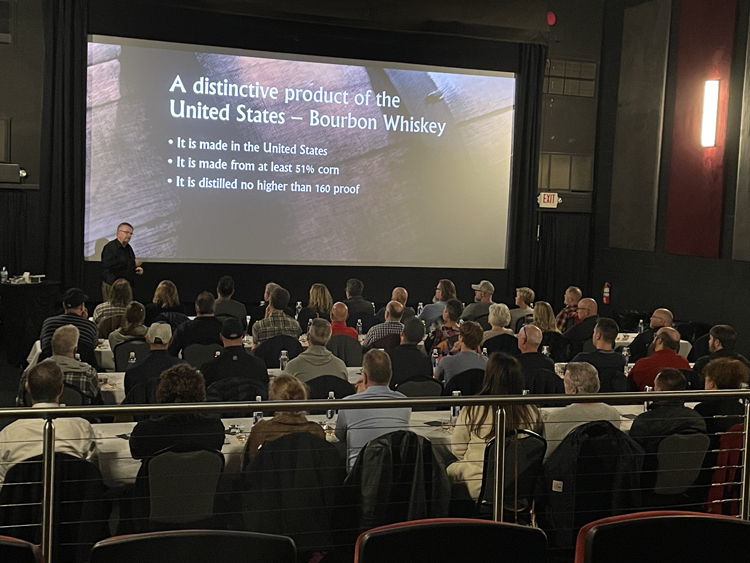
I recently viewed a YouTube video about bourbon by a father-and-son team. To set up the video, the son asks the father to describe the difference between a bourbon and a whiskey. He replies with authority that a bourbon must be made with 51% corn. This is categorically false, but I will give him the benefit of the doubt because the real answer is that it must have at least 51% corn in the mash bill. He states a few accurate things and another couple of incorrect statements, but then makes the statement that it must be aged a minimum of four years to be a bourbon. Anyone who spends even a very short time studying bourbon knows that there is no minimum age statement. Is this ignorance, or do they just not care about spreading disinformation? This video was made in 2021 and has 5.5 million views.
The result? Bad information spreads faster than good whiskey.
Why This Matters More Than People Think
Bad bourbon information doesn’t just mislead—it reshapes behavior.
It encourages:
- Overpaying for bottles
- Chasing labels instead of flavor
- Dismissing affordable, well-made bourbon
- Distrust in distilleries doing honest work
It also discourages newcomers. Bourbon shouldn’t feel like a test you can fail because you didn’t memorize someone else’s rules.
At its core, bourbon is an agricultural product, aged by time and nature—not a secret society.
What Credible Bourbon Education Actually Looks Like
Real bourbon knowledge usually sounds less flashy. It does not need to make people feel small because they do not nose or taste the same as the person describing their experience.
It includes:
- “It depends.”
- “Here’s what we know.”
- “This varies by barrel.”
- “Marketing says this, history says that”
It acknowledges uncertainty. It cites sources. It respects the difference between opinion and fact. And sometimes, it is better to just be unsure and let people know that.
And most importantly, it invites conversation instead of shutting it down.
Some Final Thoughts
I don’t expect everyone to be an expert. None of us started that way. Curiosity is good. Enthusiasm is welcome.
But confidence without care does real damage—especially when it’s amplified.
Bourbon deserves better than recycled talking points and half-remembered facts. It deserves honesty, context, and respect for the long road that brought it here.
Bourbon doesn’t need myths to be interesting. The real story—grain, wood, time, and people—is already compelling enough.
Drink what you like. Pay fair prices. Stay curious. Question the hype.
That’s how bourbon stays fun.
And that’s how the myths finally fade—one honest pour at a time.
If that makes me unpopular with the algorithm, I’m fine with that. When bourbon influencers get it wrong, it creates distrust among everyone who enjoys learning and sampling bourbon.
I’d rather be right than viral. I really would like your comments on this. Take care.
Hey Don … Happy New Year! ‘hope your year is off to a great start!?! ‘absolutely love this article and appreciate the way you have always presented both facts and curiosities! Emily and I are looking forward to seeing you at the War Dog fundraiser!
Ken B
Ken,
Great to see you last night. Thanks for checking in and I hope we can have a drink in the near future.
This is excellent content! Recently we held an event hosted by yourself, and one of the participants said to me “I don’t belong with you guys, you all know too much”. I responded by reminding him we’re all there for the same reason; to enjoy bourbon and the company!
Thanks Dan,
Appreciate your friendship very much.
This article is exactly why I subscribe to Bourbonfool. You always hit the nail directly on the head. Keep it up my friend!
Thanks Todd,
Great to see you last night and I appreciate everyone from the Bourbon Summit Group. However, you did get mentioned in a video!
Don, your last two posts have been right on point. I learned to not chase the unicorns before I met you. And you keep reminding of that. Besides my favorite bourbon is the one I have in my glass at the time. Thanks for all your insights.
Many thanks Greg. As I get older, the misinformation angers me more than ever. Hope to see you soon.
Hi Don,
I agree with you 100% on the subject. You are describing misinformation which is the spreading of incorrect information without fact checking. Misinformation is not malicious. It is laziness. Disinformation is malicious and intended to harm. How many times have you heard that bourbon has to be at least 2 years old? To be straight bourbon that is true. One correction to your statement about age. The law states that if the time spent in the new charred barrel is less than 4 years, then the age of the youngest barrel in the bottle needs to be listed, and the time is stated in days, months, or years. That means that bourbon must spend at least one day in the new barrel. Some distillers might play games and say, “Aged at least .5 days” Not sure if the TTB would buy that.
David,
I appreciate your comments and I thank you for taking the time to read my post. I look forward to my next visit to Glenn’s Creek.
Another great read!
Thanks Don for doing your part in keeping the love affair with bourbon honest (I do wish more people thought like you…it would be better for everyone).