When we talk about what makes a great bourbon, the conversation usually starts with the mash bill, the master distiller, the age statement, and maybe the proof. We discuss whether the whiskey has a high rye content, whether it’s wheated, and how many years it spent in a barrel. Today, we often discuss secondary barrel finishing, or whether an emptied cask has influenced the whiskey in some way.
But there’s another ingredient that doesn’t always get the attention it deserves.
Where did that barrel spend all those years?
You might be surprised to learn that two barrels filled with exactly the same whiskey, on the same day, can develop remarkably different flavor profiles simply because of where they were stored. And in some cases, the warehouse becomes almost as famous as the bourbon itself.
Welcome to the world of Kentucky rickhouses.
What Exactly Is a Rickhouse?
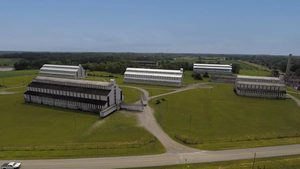
A rickhouse, sometimes called a barrel warehouse, is where bourbon spends most of its life. These buildings can contain thousands of barrels stacked on wooden racks, sometimes six or more stories high.
Kentucky’s climate plays an enormous role in the maturation process. Hot summers cause whiskey to expand into the charred oak, while cooler temperatures cause it to contract. This interaction between whiskey and wood helps create the color, aroma, and flavors we associate with bourbon. Aging in barrels is critical to great bourbon.
But here’s where things get interesting.
The temperature on the top floor of a rickhouse can be significantly different from the temperature near the ground. Humidity, airflow, building materials, and even the direction a warehouse faces can affect how whiskey matures.
Generally speaking, barrels on upper floors experience more dramatic temperature changes and often lose more whiskey to evaporation. Lower floors tend to remain cooler, sometimes allowing bourbon to mature more slowly.
However, warmer doesn’t automatically mean better. Too much oak extraction can overwhelm a whiskey, while a cooler aging environment can produce something beautifully balanced.
That’s why experienced master distillers and blenders pay close attention to where their barrels are aging. That is why so many blended whiskey’s include barrels from different rickhouses, different floors, etc.
And a few of those locations have developed legendary reputations.
Buffalo Trace Warehouse H: The Home of Blanton’s
If there’s one warehouse that bourbon enthusiasts might recognize by name, it’s Warehouse H at Buffalo Trace Distillery in Frankfort, Kentucky. Warehouse H has a special connection to one of the most recognizable single-barrel bourbons in the world: Blanton’s.
Colonel Albert B. Blanton, who spent much of his career at the distillery, reportedly had a particular fondness for barrels aging in Warehouse H. When entertaining special guests, he would select bourbon from barrels that he believed represented the very best whiskey the distillery had to offer.
Years later, Elmer T. Lee carried that tradition forward.
In 1984, Lee, with great influence by distillery executives Ferdie Falk and Robert Baranaskas, introduced Blanton’s Single Barrel Bourbon, helping establish the modern premium single-barrel bourbon category.
Warehouse H became the exclusive ageing home for Blanton’s.
Unlike many traditional brick warehouses, Warehouse H is a metal-clad building that experiences distinctive temperature fluctuations. Those conditions contribute to the maturation environment that has become part of Blanton’s identity.
Of course, the horse and jockey stopper might get most of the attention these days, but the warehouse is a critical part of the story. After all, without Warehouse H, Blanton’s might have been a very different bourbon.
Heaven Hill and the Legendary Deatsville Warehouses
Another fascinating example comes from Heaven Hill Distillery and its aging warehouses in Deatsville, Kentucky.
The Deatsville property was originally associated with the historic T.W. Samuels Distillery. Heaven Hill acquired the aging facilities in the early 1980s, eventually operating nine rickhouses at the location. These warehouses are visible behind the newly opened Old Steelhouse location.
The late Parker Beam, Heaven Hill’s longtime master distiller, reportedly had a particular appreciation for whiskey aging at Deatsville.
And when someone with Parker Beam’s experience develops a fondness for a particular aging location, I think it’s worth paying attention. Deatsville barrels have contributed to some notable Heaven Hill releases, including expressions in the Parker’s Heritage Collection.
The 2013 Parker’s Heritage Collection Promise of Hope bourbon, released to support ALS research, has a documented connection to Deatsville. The 2017 Parker’s Heritage 11-Year-Old Single Barrel Bourbon also featured whiskey aged at the site.
Now Heaven Hill has released something particularly interesting.
The new Heaven Hill Deatsville 13-Year-Old Kentucky Straight Bourbon comes from just 17 barrels, all aged on the third floor of Rickhouse AA.
That’s an incredibly specific selection.
Not simply bourbon from the Deatsville campus, but whiskey from one particular floor of one particular warehouse.
Heaven Hill has announced plans to transition Deatsville out of active aging, making this release especially meaningful for anyone interested in the history of Kentucky bourbon.
I recently had an opportunity to review this bourbon for my Bourbonfool YouTube channel, and the story behind those barrels was every bit as interesting as the whiskey itself.
You can watch this review here and understand more about the Deatsville influence.
Buffalo Trace Warehouse C: When Mother Nature Gets Involved
Buffalo Trace has another warehouse with a fascinating history.
Warehouse C was built in 1885 and has become closely associated with the Colonel E.H. Taylor Jr. collection.
One of the most unusual releases was E.H. Taylor Warehouse C Tornado Surviving Bourbon.In 2006, a powerful storm damaged the warehouse’s roof and walls, leaving aging barrels exposed to the elements. Rather than immediately moving every barrel, the distillery allowed some of the whiskey to remain in the damaged structure while repairs took place.
The resulting bourbon eventually became a limited release in the E.H. Taylor collection. I have sampled E. H. Taylor Tornado Surviving and it is an amazing whiskey. Does the Rickhouse Make the Bourbon? In this case, a weather event created the environment for a very interesting bourbon.
Buffalo Trace later released E.H. Taylor Warehouse C Bourbon, featuring barrels selected from the second and fifth floors.
These releases offer an interesting look at how environmental conditions can influence whiskey maturation. Now, I certainly wouldn’t recommend tearing the roof off your favorite distillery’s warehouse to improve the bourbon.
But the story illustrates how dramatically the environment surrounding a barrel can change.
Wild Turkey: An Entire Collection Dedicated to Rickhouses
Perhaps no recent bourbon series demonstrates the importance of individual warehouses better than Russell’s Reserve Single Rickhouse Collection.
Wild Turkey has numerous aging warehouses, including those at its Camp Nelson location near Nicholasville, Kentucky. Eddie Russell and his team have used the Single Rickhouse Collection to showcase bourbon from individual warehouses rather than blending barrels from multiple aging locations.
The collection began in 2022 with Camp Nelson C.
Subsequent releases have highlighted Camp Nelson F in 2023, Camp Nelson B in 2024, and Camp Nelson E in 2025. The 2026 release continues that tradition with Camp Nelson D.
What’s especially interesting is that these warehouses can produce different flavor characteristics even though the bourbon begins with Wild Turkey’s familiar mash bill and production methods.
Differences in building construction, barrel placement, temperature, and humidity contribute to each warehouse’s maturation environment. The result is an opportunity to explore how much character a particular aging location can bring to a whiskey.
For bourbon enthusiasts who enjoy comparing bottles, this is a particularly interesting concept.
Instead of comparing different distilleries or mash bills, you’re exploring differences created by the aging environment itself. This is a very interesting way of looking at bourbon.
Old Forester: Warehouse K and Warehouse I
Old Forester has also explored the relationship between bourbon and its aging location through its limited 117 Series.
In 2021, the distillery released Warehouse K, a 110-proof bourbon selected from barrels aging in a warehouse built in 1953. Warehouse K uses heat cycling, a process that deliberately changes warehouse temperatures to encourage interaction between whiskey and oak.
Rather than depending entirely on Kentucky’s seasonal weather, heat cycling gives the distillery another way to influence maturation.
Old Forester returned to the warehouse theme in 2024 with an 11-year-old Warehouse I release.
Those barrels aged on some of the warmer floors of Warehouse I, providing another opportunity to examine how temperature affects bourbon. The connection doesn’t end there.
Brown-Forman’s highly regarded King of Kentucky bourbon has also featured carefully selected barrels from specific warehouses and floors.
These releases demonstrate that barrel location remains an important consideration even at distilleries with long-established production methods.
Maker’s Mark: Taking a Different Approach
Not every distillery believes warmer aging conditions are the answer.
Maker’s Mark offers an interesting contrast with its Cellar Aged bourbon.
Instead of leaving the whiskey in traditional rickhouses throughout its entire maturation, Maker’s Mark moves mature bourbon into a limestone cellar where temperatures remain relatively cool and consistent. The idea is to allow the whiskey to continue developing without extracting excessive amounts of oak tannins.
The cellar maintains temperatures around 50 degrees Fahrenheit, creating a much different environment than the upper floors of a Kentucky rickhouse during the summer.
It’s an interesting approach to producing older bourbon while attempting to preserve the softer, sweeter character associated with Maker’s Mark. And it reinforces the point that maturation isn’t simply about how many birthdays a barrel celebrates.
The environment matters.
Does a Famous Rickhouse Guarantee Great Bourbon?
Absolutely not. Does the Rickhouse Make the Bourbon? Maybe.
I’ve sampled enough bourbon over the years to know that a great story doesn’t necessarily translate into a great whiskey.
You can have an impressive age statement, a famous distillery, a legendary master distiller, and barrels from the most celebrated warehouse in Kentucky.
But if the whiskey doesn’t deliver in the glass, none of that matters very much.
Aging location is only one part of the equation.
The grain recipe, fermentation, distillation, barrel construction, entry proof, and countless other factors contribute to the finished whiskey. Even barrels sitting next to one another can develop differently. I have experienced this myself when sampling single barrels.
That’s part of what makes bourbon so interesting.
The science behind whiskey production is well understood, but there’s still something special about opening a barrel that’s been resting quietly for a decade or longer and discovering what developed inside. The next time you’re shopping for a special bottle, pay attention to more than the proof and age statement.
If the label identifies a particular warehouse, rickhouse, or floor, there may be an interesting story behind that selection. And if you have an opportunity to sample bourbons from different warehouses at the same distillery, take advantage of it.
You might discover just how much influence a simple change in location can have on your favorite whiskey. After all, when it comes to bourbon, sometimes the most important real estate isn’t the distillery.
It’s the warehouse where the barrels have been resting.
Don Williams
Bourbonfool.com