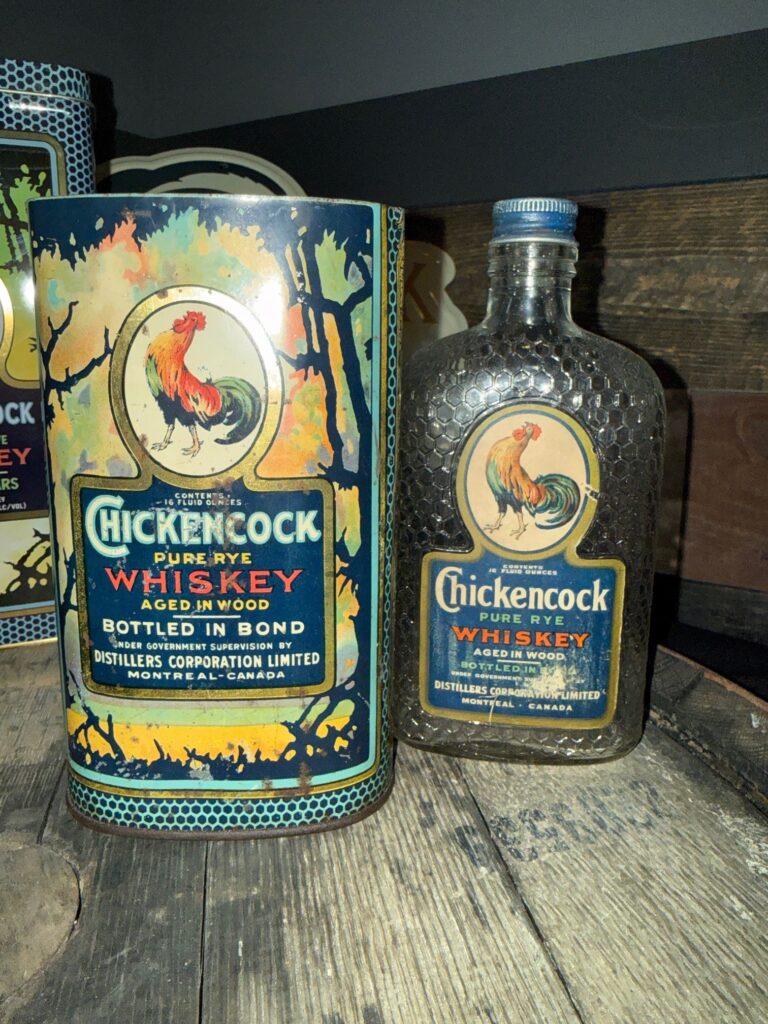
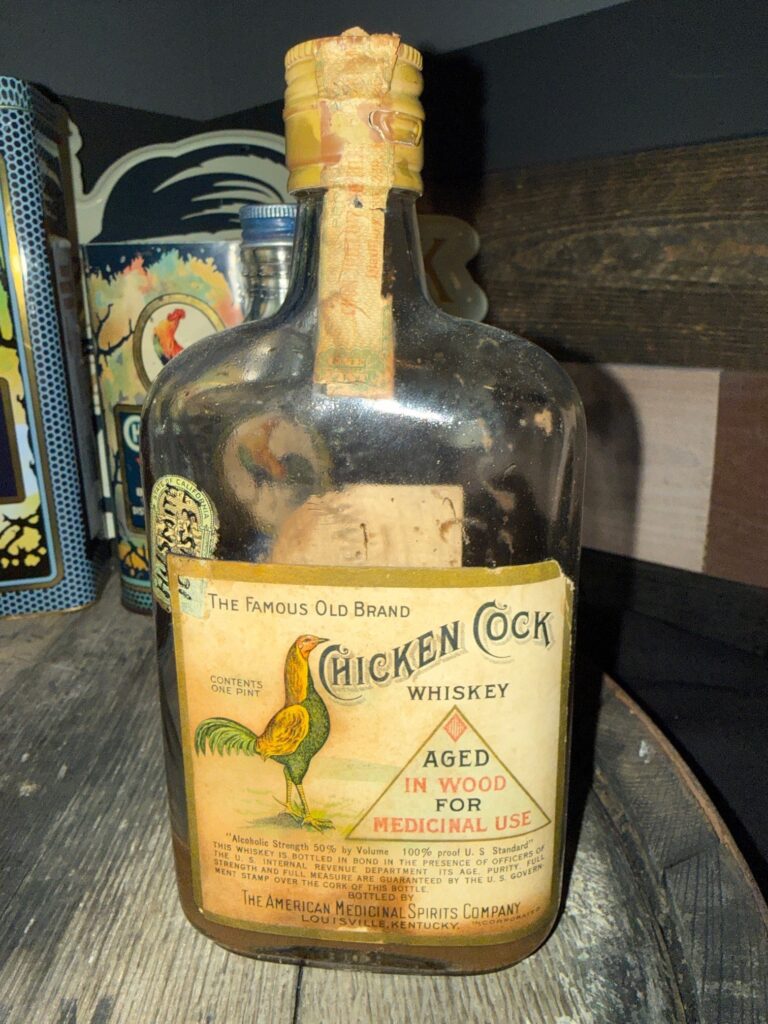
This week, I was able to sample some very different whiskeys with one common trait: each was a Chicken Cock bottle. From Cotton Club Rye to their Wheated bourbon, each was very interesting. I especially enjoyed Miller’s Reserve Whiskey. So, here is a deeper look at this very historic brand.
Beginnings
Some bourbon brands were born in the modern boom. Others were born in the 1800s, survived Prohibition, disappeared for decades, and clawed their way back. Chicken Cock Whiskey belongs firmly in the second category. When you think about it, this is a brand name that would never be approved in today’s cynical world. In the 1800s, farmers used the term “Chicken Cock” to refer to a male chicken, or rooster. It was not provocative, but normal, straightforward farm language.
Founded in 1856 in Paris, Kentucky, Chicken Cock emerged during America’s early whiskey expansion, when Kentucky distilling was transitioning from farm-based production into a recognized commercial enterprise. The brand built a reputation for quality bourbon in the late 19th century, developing distribution networks that carried its name well beyond Bourbon County.
Then came the defining challenge of American whiskey history: Prohibition.
The “Whiskey in a Can” Legacy
Before Prohibition shuttered distilleries in 1920, Chicken Cock distinguished itself with one of the most unusual packaging concepts of the era. The brand shipped its whiskey in rectangular metal tins designed to house and protect glass bottles. These were not modern aluminum cans, but sturdy metal containers that offered durability during transport.
That distinctive packaging would later become part of its legend.
During Prohibition, Chicken Cock reportedly became associated with the Cotton Club in Harlem, where the whiskey was allegedly smuggled in those same metal tins. While some details remain part documented history and part folklore, the packaging certainly reinforced the brand’s identity. It wasn’t just whiskey, but whiskey with attitude. It was also issued as medicinal whiskey during this period.
Like most heritage brands, however, Chicken Cock did not survive Prohibition intact. The label faded during the mid-20th century as bourbon consumption declined and major distilling houses consolidated power.
The Revival: 2012 and Beyond
Chicken Cock’s modern resurrection began in 2012, when the brand was formally revived after decades of dormancy. The new ownership sought to honor its 1856 roots while positioning it for a 21st-century audience increasingly fascinated by bourbon history.
The revival leaned heavily into the brand’s pre-Prohibition identity, including the return of its signature tin packaging — now updated and refined but clearly inspired by the original “whiskey in a can” concept.
This wasn’t just nostalgia. It was strategic brand differentiation in a rapidly expanding bourbon market.
Collaboration with Bardstown Bourbon Company
A critical component of Chicken Cock’s modern success has been its collaboration with Bardstown Bourbon Company in Bardstown, Kentucky.
Bardstown Bourbon Company is widely recognized for its innovative production model, blending contract distilling, custom mash bills, and a transparent approach to modern whiskey making. Through this collaboration, Chicken Cock has produced high-quality Kentucky straight bourbon and rye expressions while maintaining consistency and credibility in today’s competitive marketplace.
The partnership represents an important shift in how heritage brands operate today. Rather than attempting to rebuild historic distilling infrastructure from scratch, Chicken Cock aligned with one of Kentucky’s most technically advanced and respected modern distilleries. The result is a portfolio that balances legacy storytelling with contemporary production expertise.
A Physical Home: Tasting Rooms in Kentucky
Reviving a name is one thing. Reestablishing a presence in Kentucky is another.
In 2018, Chicken Cock opened its tasting room in Bardstown, Kentucky, positioning itself within what is often called the Bourbon Capital of the World. Bardstown represents heritage, pilgrimage, and deep bourbon tourism traffic. By planting roots there, Chicken Cock reaffirmed its connection to Kentucky’s historic whiskey landscape.
In 2020, the brand expanded further by opening a tasting room and brand experience in Louisville, Kentucky. Louisville offers a different bourbon energy — urban, revitalized, and closely connected to Whiskey Row and the city’s broader hospitality scene. This move extended the brand’s visibility to both dedicated bourbon travelers and a broader audience exploring Kentucky’s whiskey culture.
Together, these two locations signaled something significant: Chicken Cock was no longer simply revived on paper. It was physically back in Kentucky.
Modern Portfolio and Identity
Today’s Chicken Cock lineup includes Kentucky Straight Bourbon and Kentucky Straight Rye Whiskey, along with limited releases that experiment with finishing techniques and aging variations. The core profile tends to emphasize classic Kentucky notes — caramel, vanilla, toasted oak, baking spice — with balance rather than overpowering heat.
The tin packaging remains a defining visual element. In an era crowded with heavy glass bottles and wax-dipped necks, the rectangular metal enclosure sets Chicken Cock apart while anchoring it to documented history.
Why Chicken Cock Matters Today
The bourbon boom has produced countless new labels. What makes Chicken Cock relevant is not simply that it is old, but that it connects three critical eras of American whiskey:
• Pre-Prohibition commercial bourbon growth
• Prohibition-era lore and survival mythology
• Modern bourbon renaissance and strategic revival
The 2012 revival, the collaboration with Bardstown Bourbon Company, and the 2018 and 2020 tasting room openings collectively transformed Chicken Cock from a footnote into an active participant in Kentucky’s current bourbon narrative.
My Final Pour
I was told about an upcoming collaboration between Chicken Cock and another historic spirit. When it happens, the Bourbonfool will be talking about it. Quite frankly, I think it is going to be epic. Please take a look at the images below. Historic bottles and unique packaging for a brand that is part of Kentucky history. Bourbon history is not a straight line. Brands rise, disappear, and occasionally return stronger than before.
From its 1856 founding in Paris, Kentucky, through Prohibition legend, mid-century dormancy, revival in 2012, and its present-day partnership with Bardstown Bourbon Company, Chicken Cock Whiskey represents one of the more compelling comeback stories in American whiskey.
It is a brand that bridges centuries — not through marketing alone, but through documented history, strategic collaboration, and a tangible return to Kentucky soil in Bardstown and Louisville.
For enthusiasts who value both provenance and modern production excellence, Chicken Cock remains one of the most intriguing heritage revivals in today’s bourbon landscape. Chicken Cock Whiskey: From 1856 Origins to Modern Revival in Kentucky