Bourbon has always been more than a spirit. It’s been a companion. A comfort. At times, a necessity. From muddy encampments in the Revolutionary War to factory floors humming during World War II, American whiskey has marched alongside the United States military in ways that rarely make it onto back labels or marketing copy.
When you start digging into bourbon history—real history, not brochure history—you find something striking. Many of the men who built America’s great distilleries either served in uniform themselves or paused whiskey production altogether so the country could fight a war. In some cases, bourbon didn’t just survive in wartime America. It helped power it.
Whiskey Rations and the Birth of a Tradition
The connection begins before bourbon was even called bourbon. During the Revolutionary War, Continental Army soldiers were issued daily rations that often included rye whiskey. It wasn’t indulgent. It was practical. Whiskey was easier to transport than beer, safer than questionable water, and provided quick calories and morale during brutal campaigns. Whiskey was used as a currency and could be bartered for other goods or necessities.
That tradition of whiskey as both sustenance and spirit was carried forward. By the Civil War, American whiskey was deeply woven into military life, for better or worse. The whiskey ration was gone, but soldiers found ways to obtain it. Taxes on whiskey helped fund war efforts, while distillers themselves learned—sometimes painfully—that the federal government would always keep a close eye on what was coming out of their stills.
World War II: When Distilleries Became Strategic Assets
The strongest and most documented military connection comes during World War II. In 1942, the U.S. government ordered a near-total shutdown of the distillation of beverage alcohol. Distilleries across Kentucky and beyond were converted almost overnight.
Instead of bourbon, they produced industrial alcohol for explosives, synthetic rubber, smokeless powder, and medical supplies. Penicillin production, still in its infancy, relied heavily on distilled alcohol. Whiskey quite literally helped save lives.
One of the most notable examples is Brown-Forman. Under the leadership of George Garvin Brown II, Brown-Forman halted whiskey production and became a major supplier of industrial alcohol for the war effort. It’s not an exaggeration to say that without distilleries like Brown-Forman, the Allied war machine would have faced serious shortages.
The same story played out at other Kentucky institutions, including facilities that would later produce brands like Old Forester and Early Times. The stills stayed hot—but not a drop was destined for a glass.
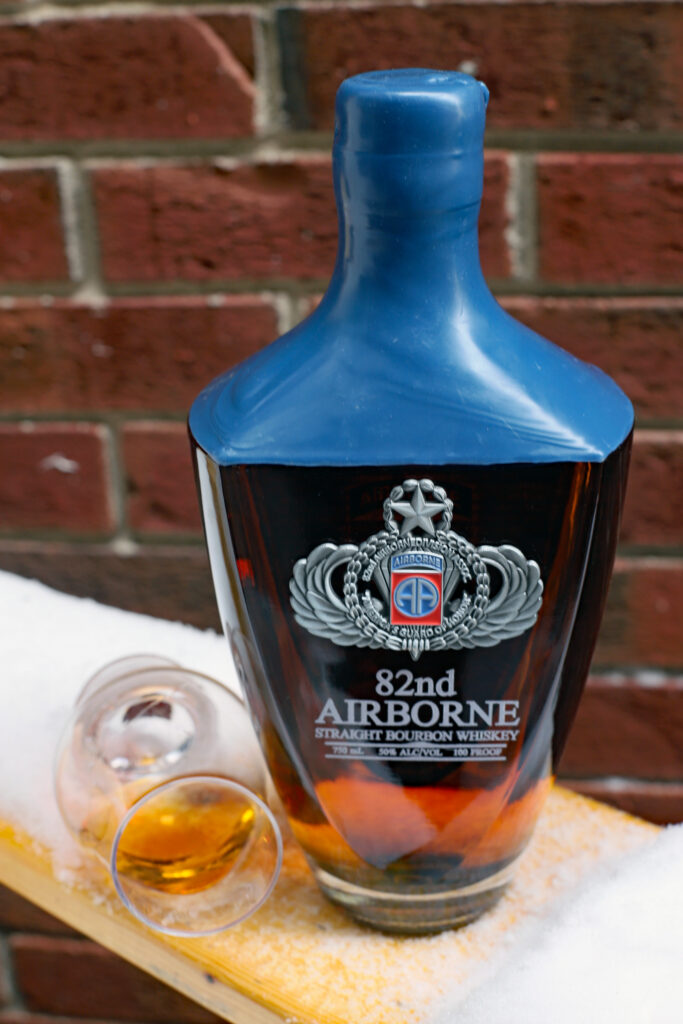
Bourbon history is American history. Bourbon, Service, and Sacrifice: When America’s Whiskey Answered the Call may sound like an overindulgent title, but it was true. There is no denying that whiskey production is woven into the American narrative. To repeat myself, not brochure history, real history. This bottle commemorates the 250th anniversary of the US Army.
Horse Soldier Bourbon is another great bourbon story inspired and created by Army Special Forces veterans. Watch our review here.
A Small List of Notable Whiskey Industry Veterans
Isaac Shelby was a Revolutionary War hero and an early Kentucky distiller
William Larue Weller fought in the Mexican-American War
George T. Stagg was a Captain in the Union Army
Elmer T. Lee was a radarman in B-29’s during World War II
Paul, Charlie, Bill, and Bob Willett all served during World War II and worked in the Willet Distillery
Julian Van Winkle Jr. left his job at the Stitzel Weller Distillery to join the army. He commanded a tank battalion in the Philippines. He was awarded a Silver Star.
Bourbon Service and Sacrifice